
The Young Rich Man

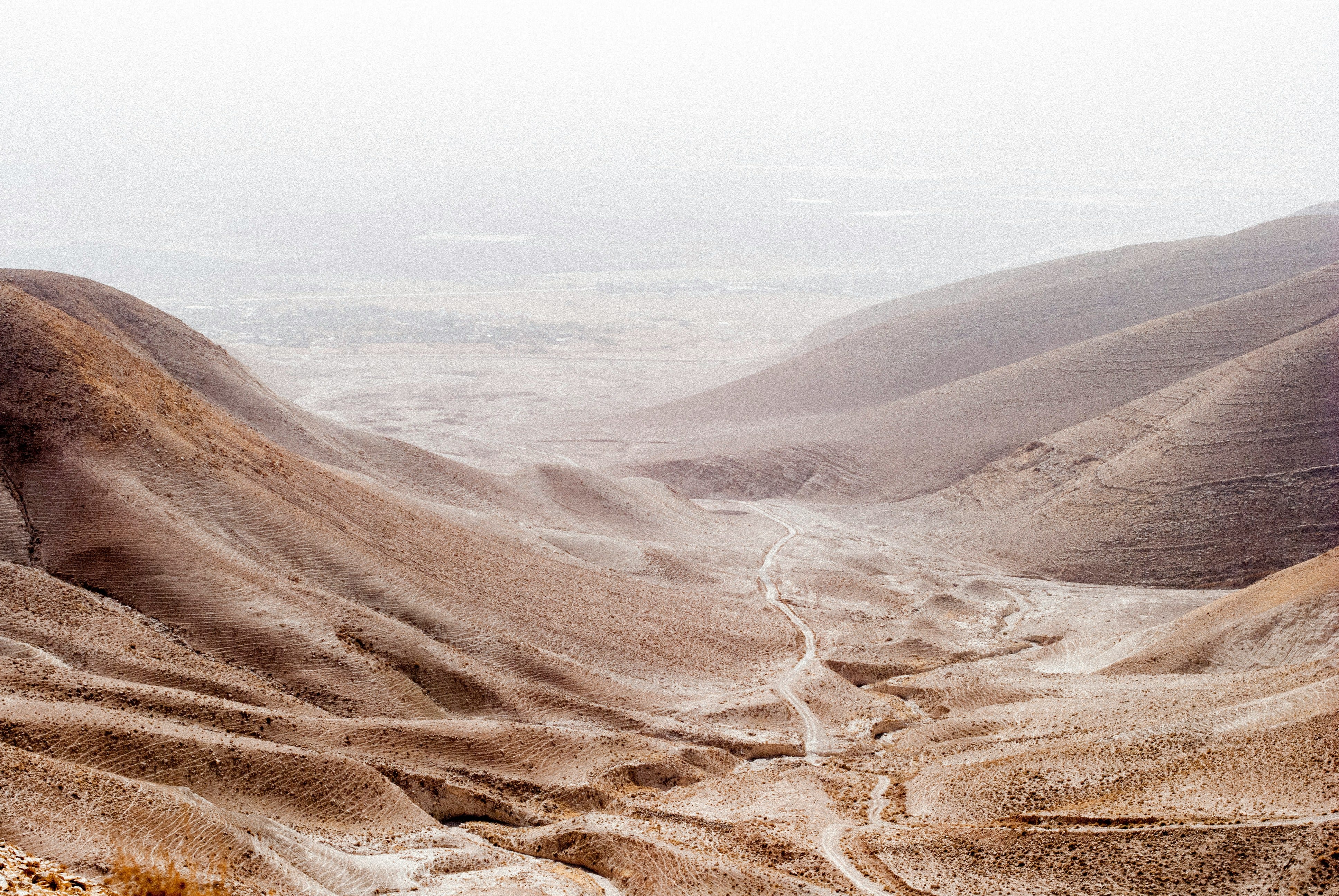
As the holy man and his followers are leaving, a man runs up to them.
It isn’t said why the man was running nor how long the man was running for. What is known is this: the man is young and he is wealthy.
The man’s name was Theodoros, and he encountered the holy man at Callirhoe, a town known for its hot springs, located east of the River Jordan. A few decades earlier, Herod the Great spent multiple weeks at Callirhoe, soaking for hours each day in the hot springs in an attempt to cure himself of his debilitating arthritis.
Although not a follower of the holy man, Theodoros was grateful for the bustling crowds that accompanied him. If these crowds kept up for another few weeks, Theodoros would be able to replace the last of his inn’s sleeping mats with straw-filled mattresses. He might even be able to purchase a small bag of garlic bulbs to add more flavor to the meals served at his inn.
Unlike the other innkeepers in Callirhoe, Theodoros made sure to set aside some of his profits in order to improve the experience of his guests. Life, Theodoros reasoned, was about balance. Balance was the reason that Abraham gave a tenth of his spoils to Melchizedek. It was also the reason that God demanded a tenth of Jacob’s harvest. Balance kept the peace.
And so, when hushed discussions about the holy man’s teachings become a regular topic amongst his guests, Theodoros listened skeptically from the kitchen.
Woe to you who are rich, for you have already received your comfort.
Woe to you who are well fed now, for you will go hungry.
Woe to you who laugh now, for you shall mourn and weep.
At its best, the man’s teachings reeked of envy to Theodoros. At its worst, they seemed to advocate for violence against innocent people, however well off they might be. Either way, what was clear to Theodoros was that the holy man’s teachings were in direct violation of Moses’ law. You shall not covet your neighbor’s goods.
Yes, Theodoros knew he was fortunate to be wealthy, but since his youth, he had obeyed all of God’s commandments. Every Sabbath, he went to the synagogue to study Scripture and to pray. On Passover, he closed his inn, so he could make the seven-day journey south into Jerusalem, taking with him a purse filled with coins that he could donate to the custodians of the Second Temple.
Yet, on those quiet nights at the inn, when all Theodoros could hear was the rustling of horses at a nearby stable, Theodoros had his doubts.
Perhaps there was more to be done.
It is 1955 in Manila, and Miguel is digging through his mother’s cabinet, looking for a needle. His parents and brother were downstairs having dinner, but Miguel excused himself early, muttering something about his stomach and needing to use the restroom.
But it wasn’t stomach discomfort that caused Miguel to leave dinner early - rather, it was his newfound recognition of his family’s lack of discomfort. His family recently installed an air-conditioning unit that made Manila’s heavy humidity non-existent indoors. Meanwhile, a squadron of live-in maids cooked all of his family’s meals and handwashed all of their laundry.
For as long as Miguel could remember, talk of money in his family was never around the absence of it, but about how quickly it was coming in. Four bakeries opening in Zambales. An expansion of one in Davao. Another one opening in the new mall in QC.
One small step forward in Miguel’s family always meant two big steps forward later - that’s what Tita Lilia, an old family friend told Miguel’s father on his wedding night. I knew your mother and her mother too, so I know this - there’s always been luck in your family.
This luck had somehow even followed Miguel’s father into World War Two. When a squadron of Japanese soldiers arrived in his father’s town of five thousand, Miguel’s father was part of the delegation sent by the villagers to negotiate with the soldiers.
Food, water, bed. In broken English, those were the words that the Japanese soldiers kept repeating with increasing urgency. Food. Water. Bed. The soldiers’ hands were gripped tightly on the handles of their rifles.
Gohan, Miguel’s father said with a clear voice as he motioned towards the village. It was the one Japanese word he knew. The Japanese men looked at each other and shrugged, before following Miguel and the other men into the village. During the Japanese occupation, no one in his father’s village was harmed.
Miguel had always liked the idea of his family’s luck being some kind of heirloom, but after Mass earlier that day, that luck now seemed like a burden. The Gospel was about a young rich man who ran up to Jesus, asking him what he needed to do in order to enter the Kingdom of God. Jesus responded by telling the man to give away all his belongings and to follow him, an answer which caused the young man to walk away sadly.
It is easier for a camel to go through the eye of a needle than for someone who is rich to enter the kingdom of God.
For his sermons, Father Jomar would mostly recite quotes from saints or read paragraphs from statements issued by the Pope, both of which had the regular effect of putting Miguel’s father to sleep. But for today’s sermon, Father Jomar spoke with a thundering cadence, alternating in both English and Tagalog.
“This young rich man follows the law to its very last letter and it’s still not enough for our Lord.” Father Jomar paused for a beat. “My fellow brothers and sisters, ito lang talaga. This life is not a dress rehearsal.” This last sentence struck Miguel like lightning.
After looking through his parents’ bedside drawers, Miguel moved to the bathroom and found a needle in the top drawer of the bathroom cabinet. Unfortunately, the needle’s eye looked just as he expected - it was distressingly tiny.
Frowning, Miguel put the needle back into the cabinet and thought that perhaps his family was different from the wealthy ones that Jesus was referencing. When the donation bag was passed around at church, Dad would put in crisp bills, rather than coins. And for the nine nights of Simbang Gabi in December, Mom would instruct the katulong in their house to prepare multiple trays of food for the post-Mass potluck, more than any other family as far as Miguel could tell. And for Christmas, his father would hand out thick envelopes to the maids and drivers at their compound.
Miguel’s father ignored Miguel and Alfonso when they asked about how much money was in the envelopes, but Miguel’s younger brother Alfonso was clever enough to ask the katulong themselves. Apparently, the envelope money was the equivalent of one month’s salary.
But was that enough?
In the gridlocked Manila traffic, there were pregnant women knocking on car windows and one-armed kids extending out a cupped hand to drivers. And after mass, when sampaguitas flowers were being sold by the orphans, Miguel and his family would beeline right past the groups of children, into the comfort of their air-conditioned mini-van. Only Alfonso seemed to engage with the orphans, looking at the children in the eyes and then his parents, in an attempt to get them to hold on for just one second.
After one Sunday mass, just as Miguel’s family closed the van doors on the children selling their wares, Alfonso brought up the story of the young rich man to their parents.
“We can’t give money to everyone who asks, so we’ve got to prioritize,” their father said as he turned around in the driver’s seat to ruffle Alfonso’s hair.
“Family’s a good place to start,” their mother chimed in.
Later that night, Miguel wondered who was right, his brother or his parents. So, he tallied up the score - the good, the bad, the in-between. Did donating at Sunday Mass make up for ignoring the kids selling sampaguitas outside the church? And what about the Christmas bonuses for the family’s employees? How much would those envelopes count?
Miguel pulled up the covers to his chin, given the chilly temperature in his bedroom. He thought that none of the Bible stories he knew took place in cold weather. The Israelites wandered the desert for decades after escaping Egypt. Jesus prayed for weeks in the desert before finding the strength to begin preaching.
Listening to the whir of the air conditioner, Miguel eventually fell asleep.
About a week after the holy man arrived in Callirhoe, Theodoros’ cousin Zacchaeus stopped by the inn, hunching slightly to enter through the doorway. With Zacchaeus’ looming presence and booming voice, heads tended to turn whenever Zacchaeus entered a room.
For months now, Zacchaeus and a small but growing group of men were meeting on the Sabbath to discuss Scripture and politics. Zacchaeus and his group were pushing for a widespread boycott against the higher taxes that the Romans were now demanding.
“We will still be paying taxes,” Zacchaeus explained as he and Theodoros sat down on straw mats. “We will deliver the coin, sheep, and linen to the collaborators’ homes ourselves even - but it will be at the rate our fathers paid and their fathers before them.”
“And what if the prefect sends legionnaires from Jerusalem?” Theodoros asked. “What then?”
“Have you ever wondered where the additional tax money will go?” Zacchaeus growled. “There are rumors of a war in the far west in Britannia and north in Germania. Rome intends to conquer the world if it can - on the backs of our people.”
Theodoros doubted Zacchaeus. Tribute would flow into Jerusalem and be shipped off to Rome and from there, distributed to various provinces, infrastructure initiatives, and military campaigns. Perhaps, a ledger existed, but the last people to see it would be a conquered people. Zacchaeus spoke with such conviction, but it was hard to know for sure how tribute would be spent.
Still, there was the issue of faith. Theodoros did wonder if his tacit acceptance of the Roman occupation was an affront to God. After all, he accepted Roman coin, embedded with the Emperor’s image, despite God’s command in the book of Shemot: You shall not make for yourself a carved image, or any likeness of anything. You shall not bow down to them or serve them.
The holy man, for his part, did not seem to care much for politics. When asked in another town about the validity of the higher taxes, his response to the question was clever. Render therefore unto Caesar the things which are Caesar’s, and unto God the things that are God’s.
Zacchaeus’ barking laughter filled the inn when Theodoros relayed the holy man’s response about taxes. “Tell me cousin, what are the things that are Caesar’s and the things that are God’s? And who would you have determine such questions - our elders or the prefect? Or, would you rather leave it up to this teacher? A man from Galilee at that, hah! Perhaps, he’s a great teacher to fishermen, I will give him that.”
Theodoros let Zacchaeus drone on. There was no reasoning with his cousin when he became so animated. Everything to Zacchaeus was so black and white - it was Romans versus Jews, independence versus slavery, everything or nothing. Life, Theodoros thought, was more complicated.
Still, Zacchaeus posed some interesting questions. What did belong to Caesar? And which things belonged to God? Theodoros decided that evening that he would go into the town square the next day to listen to the holy man himself.
Perhaps, the holy man would have something to say on this matter.
It is 2026 in Los Angeles, and at the age of 81, Miguel is on his way to his late brother Alfonso’s apartment to look for the will. While the two brothers just lived an hour away from each other, they only saw each other a few times a year, usually at some midpoint destination, so the commute wasn’t all that familiar to Miguel. After arriving at Alfonso’s apartment, Miguel makes a sign of the cross, grateful that he didn’t fall asleep on the drive over.
Even before Alfonso’s death, Miguel had issues with his sleep. Late into the night, he had been hearing his father’s voice. Just count to a hundred and once you’re there, do it again. This was what Miguel’s father would say the week after they moved to the United States, during those long nights when Miguel would toss and turn in bed, battling against jet lag.
His father’s advice, sage at one point in time, no longer seemed to apply. Sleep for an hour. Lie in bed for an hour. Watch TV for 30 minutes. Sleep again for two hours. The past few days blended together, strung together by shallow naps. He found himself going about his day in a dreamlike state. Distracted, Miguel almost ran through two red lights on his drive over to Alfonso’s.
If Miguel had gotten hurt, it would have been for next to nothing. Miguel suspected that Alfonso’s will would hardly be of any consequence.
Given Alfonso’s teacher salary and the changes in his neighborhood, it was likely that Alfonso’s meagre savings had long been consumed by rising rents. Fifty years ago, the neighborhood consisted of Armenian families, kebab restaurants, and auto-repair shops, but now, every other storefront seemed to sell some variant of a matcha latte.
This sort of life was apparently fine for Alfonso, judging by his posts on social media. Every few weeks, Alfonso would post some photo of himself and some kid he taught twenty years earlier coming back to visit. Other times, Alfonso would share a PDF link to some short story he wrote. Teaching and writing. Writing and teaching. Outside of Alfonso’s daughter - who he raised largely by himself following his wife’s sudden passing decades ago - that was his life. And sure, that sort of life appeared to be wholesome, but Miguel also felt that it was somewhat of a waste.
Miguel had largely come to this conclusion because of a conversation with a non-profit marketing director decades ago, just a few months after Miguel’s longtime employer went public. With advances in technology and the ability to donate across borders, you can save more lives than saints or benevolent kings. It’s just $5,000 to save a life.
Malaria nets in sub-Saharan Africa, good. Donations to your local church, bad. Vitamin A supplements to reduce child mortality in East Timor, good. Helping fund your local elementary school, bad.
Life, Miguel believed, boiled down to how many people one helped. Sure, Miguel and his ex-wife never had children (or wanted them), but that gave Miguel even more financial freedom to make a positive impact. Yes, goodness seemed more natural to Alfonso - that’s what Miguel had always thought as a child - but how many lives did Alfonso save in his lifetime?
Even with an expensive divorce and his somewhat luxurious lifestyle, Miguel had been able to save hundreds of lives in his lifetime. You can save more lives than saints or benevolent kings.
Miguel shook his head as he imagined his mother reminding him to not compare. Even as a child, Miguel was always curious about how he was doing relative to others, a trait that his mother had done her best to stamp out. Best to just focus on the task at hand, Miguel thought as he walked into his brother’s bedroom and opened the bedroom closet.
Inside, he found a weathered Spalding basketball on the floor, next to a pile of old shoes. Miguel had forgotten how much he and Alfonso had played basketball as kids. As Miguel reached down for the basketball, he felt himself encircling the vague outlines of a memory, feeling the warm heavy blanket of Manila’s humidity along with the thin film of sweat that would accompany him throughout the year.
He remembered that back in the Philippines, his mother would occasionally play basketball with Miguel, Alfonso, and their father - one time even beating them in a game of HORSE, using the same basketball that Miguel was now holding, more than 70 years later.
Miguel remembered that his mother ended the game on a left handed hook shot from the free throw line, somehow banking the ball in. While Alfonso, Miguel, and their father looked at each other with mouths agape, their mother simply shrugged and went back inside the house. Until now, Miguel had forgotten that his mother was left handed.
Miguel remembered the sleepy sermons that Father Jomar read from the pulpit, the yells of taho from the nearby tofu vendors in the morning, and his father’s booming laugh which only Miguel’s mother or a few San Miguel beers could seem to elicit.
He remembered how after one Mass, their family car was infused with the jasmine scent of a dozen sampaguitas flowers, crumpled and stuffed in Alfonso’s pockets after Alfonso snuck out of Mass early to buy as many sampaguitas as he could with his Christmas money.
He remembered the first time he asked his father about World War Two.
Did you guys not have guns when the Japanese soldiers arrived?
We had guns.
Were you and the other villagers outnumbered?
There were only twenty Japanese soldiers.
As a child, Miguel saw his father as the man who saved the village. Gohan, his father had said. It was only when Miguel moved to America that he even considered the possibility of his father being a coward. The Japanese Empire meant Pearl Harbor, comfort women, kamikazes. Evil was staring Miguel’s father in the eye and his father simply offered food. That’s what Miguel’s American friends said. Iwo Jima, Midway, Manila Bay - that’s where their fathers had fought in the Pacific. They had enlisted themselves even. Volunteered, not drafted. Volunteered, not collaborated.
Just a few days ago, Miguel could have called Alfonso to talk about their father. Alfonso would have brushed away Miguel’s negativity.
Dad was just doing his best. Could we have done better?
And maybe Miguel wouldn’t have said this to Alfonso then - it would have been much too sappy to say - but he would say it now.
Not me, but you, Alfonso. You would have done better.
For the first time since learning about his brother’s death, Miguel wept. Home, Miguel realized, only existed in relation to his loved ones - his mother, his father, his brother. Without them, home was a moving target, something anchored loosely in his deteriorating memory.
The only company he had these days would be Alfonso’s stories. Miguel had always been too busy as an executive in the corporate world to read his brother’s stories, but now, he had time on his hands. Miguel looked up at the bedroom clock and saw that Alfonso’s daughter would be arriving at the Los Angeles International airport in a few hours. In the meantime, he could spend some time resting - Lord knows he needed it.
Miguel stepped outside his brother’s bedroom and walked over to the kitchen table to flip through the books and magazines Alfonso had left there. There was an issue of Granta and the most recent version of the Pushcart anthology. There was also a set of papers stapled together with a cover page, titled “The Young Rich Man.”
Miguel took the stapled set of papers and brought them with him to the couch. He wasn’t sure if he wanted to read or to catch up on sleep while he waited for his niece to arrive, but he at least would put himself in a win-win position - either Alfonso’s story would be engaging or Miguel would finally get some much needed sleep.
For the first time that day, Miguel smiled. Alfonso always was a considerate person.
In most versions of the story, the young rich man walks away sadly after being told to give away all his belongings. But other scholars translate the Greek differently, saying that grieving is the more accurate word to use. So, one can also say that the man walks away grieving.
As Theodoros walked away, he felt that he was within the desert itself, wading slowly through an underworld of sand. He held a linen scarf over his mouth and nose to protect himself from the grains of piping-hot sand that had seemingly come alive, shrieking as they whizzed by.
The sandstorm reminded Theodoros of the furious whirlwind from which God spoke to Job.
Have the gates of death been shown to you?
Have you seen the gates of the deepest darkness?
Have you comprehended the vast expanses of the earth?
Tell me, if you know all this.
On another day, Theodoros would have contemplated God’s words to Job, but today, Theodoros was preoccupied with grief.
Theodoros was grieving because twenty years ago, his father had spent months converting the inn’s packed dirt floors to stone, using the pebbles from Callirhoe’s hot springs.
He was grieving because it would only be a matter of time before he married someone from a respectable family, the type of family that would provide land, servants, and even jewelry as part of a substantial dowry.
He was grieving because as he turned away, he had heard the proclamation of the holy man to his followers - that it was easier for a camel to walk through the eye of a needle than for a wealthy man to enter God’s kingdom.
But for thousands of years after, what preachers, theologians, and scholars did not understand was this - Theodoros was grieving because he had decided to give it all away.